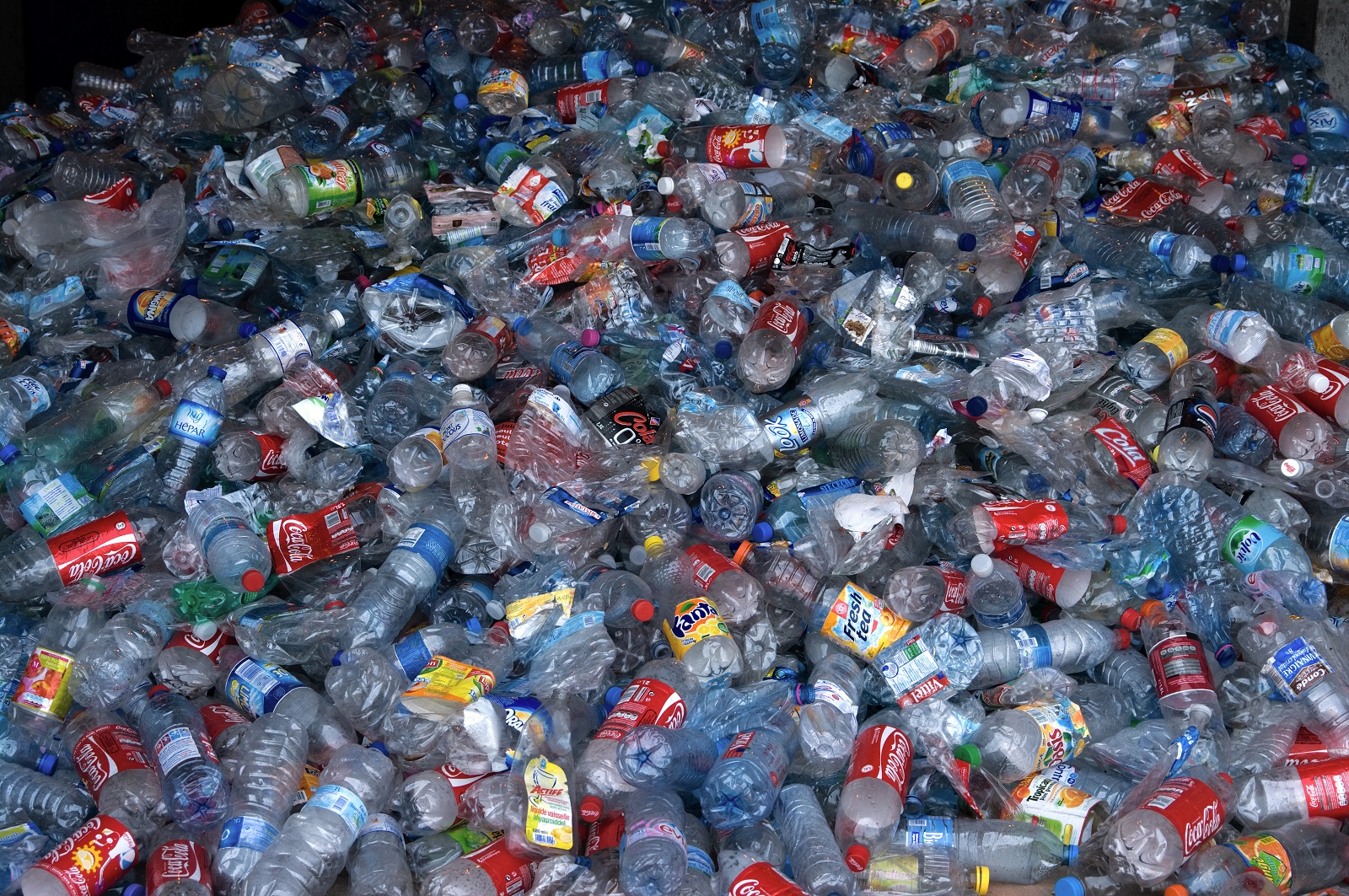
Moving from destructive consumption toward a zero-waste system
Our throw-away economy harms our environment, health and climate. Trash in America outlines the costs of this system and a path to a zero-waste future.
Our throwaway economy takes valuable natural resources and turns them into trash, often for products that are used for only a few seconds, creating pollution at every step along the way.
Every year, Americans throws out 265.3 million metric tons of trash — an average of 1,788 pounds per person — with most of it going directly to landfills or incinerators, polluting our air and water.
It’s time for a change. America must move toward a zero-waste system – one in which products are built to last and can be fixed when they break, and in which as many materials as possible are reused, recycled and composted in a continuous cycle.
What’s in America’s trash?
More than 28% of all U.S. garbage consists of packaging, which is generally designed to be thrown away once the product it contains is used. Less than half of all plastic packaging on the U.S. market is recyclable, and only a tiny fraction of that actually gets recycled.
According to the U.S. Department of Agriculture, America throws away approximately 133 billion pounds of wasted food each year. That accounts for more than one-fifth of our garbage. By one estimate, if all of the food wasted each year in the U.S. came from a single farm, that farm would be roughly the size of California and New York state combined.
E-waste: America throws away more than 7 million metric tons of discarded electronics every year — around 47 pounds per person. Personal devices alone, like laptops and phones, account for about 5 million tons of that waste.
Clothes: The world is producing more clothing than ever before — over 100 billion pieces a year, double the amount produced 25 years ago. In 2018, Americans discarded 34 billion pounds of textiles, the majority of which was landfilled (66%) or incinerated (19%).
What’s the problem with trash?
America’s linear material economy, in which materials are extracted, made into goods and disposed of, is a one-way street that creates massive environmental and public health impacts along the way.
Plastic pollution: An estimated 16.5 million tons of plastic washes into the world’s oceans every year. This plastic persists for hundreds of years and can kill marine animals by entangling them, poisoning them or blocking their digestive tracts. Microplastics created from the degradation of ocean plastic can also make their way into the food chain, harming marine animals and making their way into our bodies through seafood consumption.
Air pollution: Trash incinerators produce heavy metals such as mercury, a neurotoxin that impairs brain function, as well as cancer-causing pollutants like dioxin, one of the most toxic substances known to humanity. So-called chemical recycling — a new form of incineration, falsely depicted as “recycling” by its proponents — among many other environmental harms, likewise emits toxic chemicals into the air, including chemicals known to cause cancer, reproductive harm, birth defects and other health problems.
Water contamination: Contaminants leaching from landfills can escape into the environment and threaten drinking water supplies. Formed when rainwater filters through the buried waste, drawing out chemicals and other toxins, leachate can contain heavy metals, ammonia nitrogen compounds, pharmaceuticals, per- and polyfluoroalkyl substances (aka PFAS, or “forever chemicals”) and other harmful chemicals.
Global warming pollution: Roughly 42% of U.S. greenhouse gas emissions are created in the process of “manufacturing, use and disposal of materials and products.” In 2022, landfills released 17.1% of all U.S. human-caused methane emissions. Landfilled food waste creates more methane emissions than other landfilled materials, accounting for around 58% of total methane emissions from solid waste landfills.
What can we do to fix America’s trash problem?
Cities and states are taking steps toward reducing waste and curbing the environmental and public health threats posed by our current waste system.
As of 2025, 35 states have enacted a total of 146 extended producer responsibility (EPR) laws across 21 product categories to shift responsibility for the costs of recycling away from the taxpayer and onto the companies that produce those products. Maine, Oregon, Colorado, Minnesota, California, Maryland and Washington now have producer responsibility laws for packaging.
Twelve states have enacted some form of statewide ban on single-use plastic bags. Many towns and cities have their own bans or restrictions, and more are considering restrictions on other single-use foodware, packaging and other items. Plastic bag bans eliminate an estimated 300 single-use plastic bags per person per year in places where such bans are in effect.
Many communities are banning the sale of polystyrene (aka Styrofoam), or specific polystyrene products like take-out food containers and packing peanuts. In the first year of a polystyrene ban in Washington, D.C., the amount of polystyrene collected from the Anacostia River fell by more than half.
Several states have passed laws against sending recyclable and compostable waste to landfills. Vermont, for example, bans food scraps and yard waste from landfills. A similar policy in Massachusetts that banned most commercial disposal of food waste in landfills achieved a 13.2% reduction in the amount of organic waste being sent to landfills, with more than 380,000 tons of food waste being diverted and repurposed annually.
Banning the use of toxic substances in products. A growing number of states have enacted or proposed bans or restrictions on PFAS, particularly in consumer products like food packaging, textiles and cookware, as well as a range of other products. These measures not only protect consumers from PFAS exposure during the lifetime of the products, but they also prevent PFAS from finding its way into the environment upon disposal.
A zero-waste future is possible.
America has the tools to shift away from a wasteful, polluting and costly linear system to a circular material economy that produces zero waste, conserves natural resources, and limits pollution and global warming emissions.
Here are 12 steps that companies and governments at all levels can take to move America toward a future of zero waste.
Set goals to achieve zero waste, including goals for composting, recycling, the reuse of recycled materials, and the repairability, recyclability and compostability of products.
Limit the production and sale of single-use items that are not easily recyclable or compostable, including packaging, plastic bags and food service ware.
Encourage package-free modes of retail and help them compete on a level playing field with companies employing less sustainable practices.
Eliminate the use of harmful chemicals in products, especially food packaging and containers.
Require producers to take responsibility for their products during their entire life cycle.
Make recycling and composting mandatory, accessible and cheaper than garbage disposal.
Require goods to be built to last and easy to repair, reuse, recycle or compost.
Invest in repair, reuse, recycling and composting facilities to support a circular economy.
Require producers to use recycled and reused materials in new products and encourage businesses and governments to set procurement standards for recycled materials.
Oppose the construction, expansion and subsidization of landfills, incinerators and so-called chemical recycling facilities.
Tighten and standardize definitions of “recycling”; for example, ensuring that waste-to-fuel schemes that turn plastic waste into fossil fuels (so-called chemical recycling) are not classed as recycling.
Ensure transparency regarding our waste and its impacts; for example, by publishing regular data on the volume and composition of the nation’s waste and compelling waste disposal companies to be transparent about the pollution emitted by their facilities.
Frequently asked questions about trash in America
How many pounds of trash does the average American produce a day?
Americans throw out 4.9 pounds of trash per person every day — that’s nearly 1,800 pounds of materials per American every year.
How much trash is produced in America in a day?
Every 15.5 hours, Americans throw out enough plastic to fill the largest NFL stadium in the country, AT&T Stadium (the home of the Dallas Cowboys), and the pile grows larger every year.
How is most municipal waste disposed of in the United States?
In 2018 alone, the U.S. threw out 265.3 million metric tons of municipal solid waste (MSW) — the materials discarded by homes, businesses and institutions, such as universities and libraries.
What happens to trash?
The majority of waste (62%) discarded by homes and businesses in the U.S. is ultimately dumped into landfills or burned in incinerators.
More than 91% of plastic was landfilled or incinerated in 2018.
What types of trash could be recycled?
Nearly all of America’s trash could be composted and recycled.
Food waste and yard trimmings make up more than a third (33.7%) of U.S. garbage and are organic and easily compostable, but the U.S. lacks sufficient infrastructure.
Paper and paperboard, some of which could be composted and the rest of which could be recycled, make up nearly a quarter (23.1%) of America’s trash.
Metals, glass, and plastics — another quarter (25.2%) of America’s garbage — are all readily recyclable, although many types of plastic are not.
Rubber, wood, leather, and textiles make up the remainder (15.1%) of America’s waste and can also be recycled into useful products. Textile recycling has made great advances in recent years.
James Horrox is a policy analyst at Frontier Group, based in Los Angeles. He holds a BA and PhD in politics and has taught at Manchester University, the University of Salford and the Open University in his native UK. He has worked as a freelance academic editor for more than a decade, and before joining Frontier Group in 2019 he spent two years as a prospect research analyst in the Public Interest Network's LA office. His writing has been published in various media outlets, books, journals and reference works.
State Director, Environment Oregon Research & Policy Center; Director, Beyond Plastics, Environment America Research & Policy Center
As director of Environment Oregon, Celeste develops and runs campaigns to win real results for Oregon's environment. She has worked on issues ranging from preventing plastic pollution, stopping global warming, defending clean water, and protecting our beautiful places. Celeste's organizing has helped to reduce kids' exposure to lead in drinking water at childcare facilities in Oregon, encourage transportation electrification, ban single-use plastic grocery bags, defend our bedrock environmental laws and more. She is also the author of the children's book, Myrtle the Turtle, empowering kids to prevent plastic pollution. Celeste lives in Portland, Ore., with her husband and two daughters, where they frequently enjoy the bounty of Oregon's natural beauty.