Tell Amazon: We need repair scores
We've ranked top brands and models for repairability. Check out our guide before you purchase your next phone.

Cell phones are investments, and important ones at that. So it can be frustrating to toss out your phone after just a year or two because it’s too difficult to repair. With all the ways we use them day to day, and the money they cost, you deserve to know upfront how easy it is to repair your next phone.
The consequences of keeping repair information from consumers wastes people’s money. But the consequences don’t end there.
Phones that are tossed out when they malfunction make up a significant chunk of electronic waste, or e-waste, which is one of the fastest-growing waste streams in the world. Phones and other products, from laptops to fitness watches, are piling up in landfills, wasting precious resources such as silver and copper and leaching chemicals into the soil and groundwater. It’s a burden on our environment and health. It’s also a burden on our wallets.
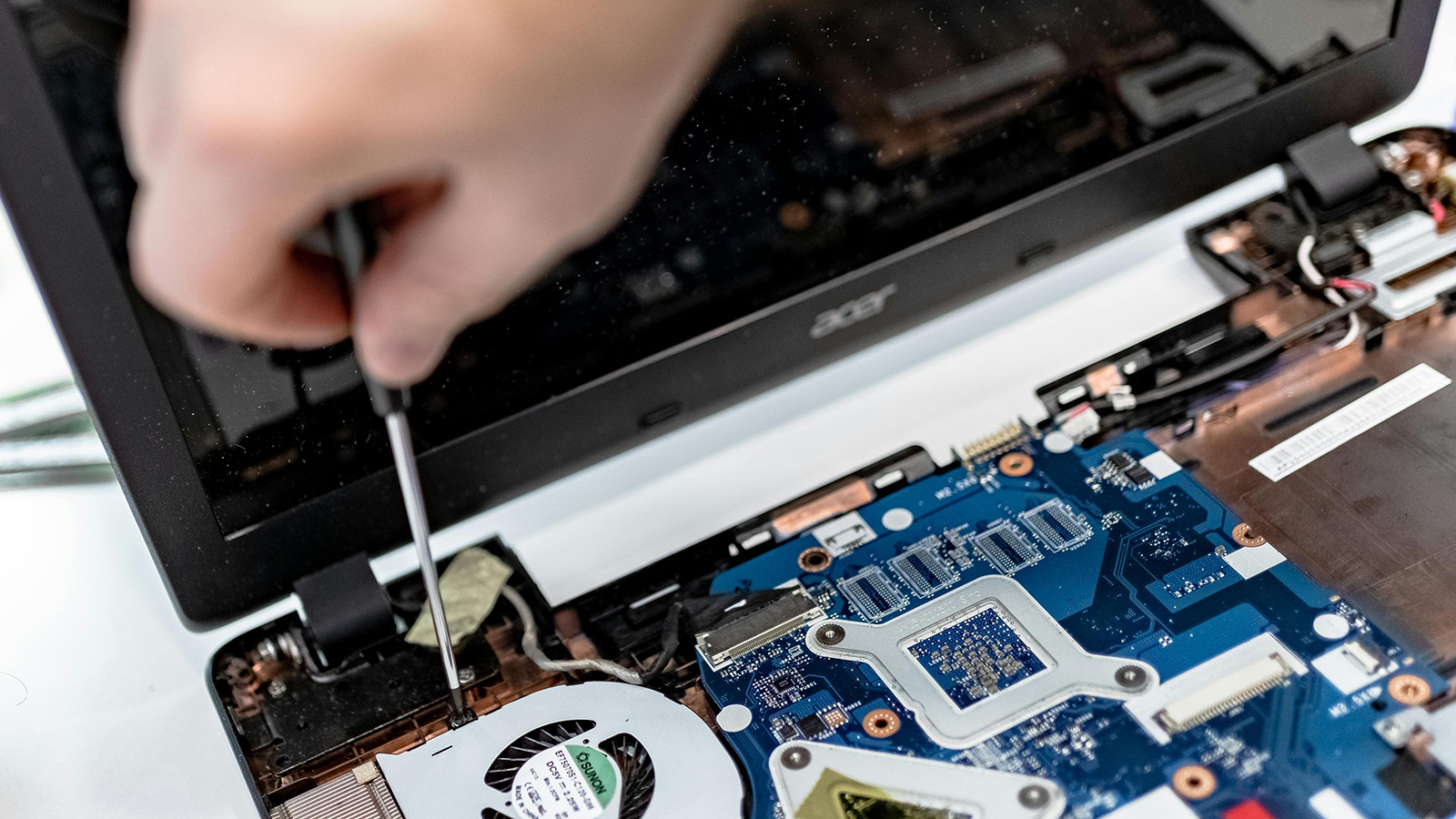
Having more repairable products would mean fewer electronics such as laptops go to the landfill and harm our planet and health.
In our new report, “Failing the Fix,” we investigated which phones are the most repairable. The resource provides intel on the four most popular cell phone brands and grades manufacturers on factors—including the clarity of manuals, ease of disassembly, availability of parts and more—that determine whether their products are “repairable.”
We graded four of the leading phone manufactures–Motorola, Google, Samsung and Apple–using the European Union’s newly repairability metrics.
Motorola leads cellphone manufacturers with a B+, followed by Google with a C-, Samsung follows with a D and Apple is last with a D- grade. These new scores highlight the fact that leading cellphone manufacturers, particularly Samsung and Apple, have plenty of room for improvement.
But even the last-place finisher Apple has made real progress. The company has improved how it handles parts-pairing, or the practice of tying components to a specific device so that third-party repairs result in degraded functionality or error messages.
With the iPhone 16 and iOS 18, Apple introduced a new on-device Repair Assistant and allows used Apple parts to be calibrated and reused in repairs—a meaningful shift from its prior policy, which required an Apple-authorized technician to finalize even basic repairs.

Photo by TPIN Staff | TPIN
We based our scoring for phones on the European Union’s newly updated repair scores, which take into account the realities of repair than previous iterations of its metrics. These scores are determined by repair information, ease of disassembly, availability of spare parts, fasteners, tools and software updates.
This new European Union labeling now correctly prioritizes disassembly in its methodology, fixing a problem we identified with the French scoring method.
Nobody walks into an electronics store looking to buy something that will malfunction and need to be tossed out. But right now most of us don’t know which products will end up in the landfill versus which ones will last for a long time.
We need transparency. A consistent repair score that allows apples-to-apples comparisons—just like Energy Star labels on appliances—would give us a simple way to compare repairability at the point of purchase and give manufacturers a real incentive to compete on fixability.
Many retailers and manufacturers already have repairability scores due to EU labeling requirements. But unfortunately, these labels are still rare in the U.S.
We’re urging Amazon to share repair scores for the electronic devices they sell, so that consumers can know how repairable products are before they shell out money to buy them. Your support helps tip the scales in the right direction. Add your name today.
Senior Director, Campaign for the Right to Repair, PIRG
Nathan leads U.S. PIRG’s Right to Repair campaign, working to pass legislation that will prevent companies from blocking consumers’ ability to fix their own electronics. Nathan lives in Arlington, Massachusetts, with his wife and two children.