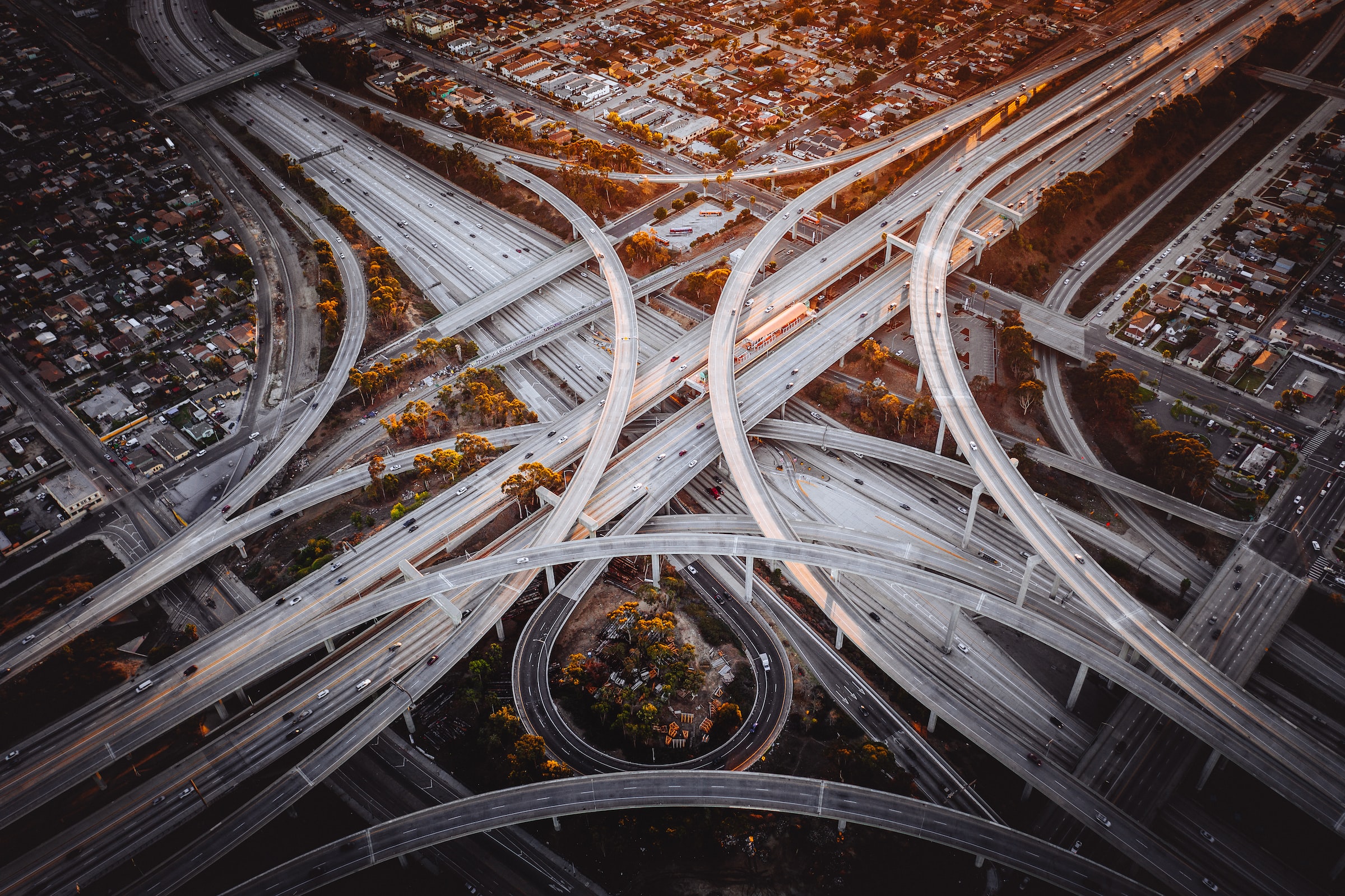

Year after year, state and local governments propose billions of dollars’ worth of new and expanded highways that often do little to reduce congestion or address real transportation challenges, while diverting scarce funding from infrastructure repairs and key transportation priorities.
Updated
Since 2014, PIRG has documented 73 wasteful or unnecessary highway projects, originally slated to cost a total of at least $173 billion. Learn about projects in your area using the map and search tool below.
America spends more than a quarter-trillion dollars each year maintaining and expanding our system of highways. Roughly half of that money comes not from gas taxes or other charges paid by drivers, but rather from ordinary taxpayers.
Federal, state and local governments face difficult choices in the years ahead. They can choose to focus transportation spending on real and critical needs with our transportation system, or squander an ever-increasing amount of taxpayer money on wasteful boondoggle projects that double down on the failed transportation strategies of the past.
The 2021 bipartisan infrastructure law (a.k.a. The Infrastructure Investment and Jobs Act, or IIJA) offers a cautionary tale. Rather than maximizing the amount of money spent on fixing our aging roads, making our streets safer, or providing options for Americans to travel without needing a car, many states spent lavishly on new or expanded highways – despite decades of evidence that highway expansion fails to address traffic congestion.
As of June 2025, states committed $215 billion in highway and bridge formula funds from the IIJA, supporting over 100,000 new projects. While many of these projects include major necessary repairs and rehabilitation, many include expansion of highway capacity. Since 2022, over a fifth of funds provided through the IIJA were used to add lanes or widen existing roadways.
Wasteful highway construction and expansion projects nationwide don’t solve congestion or improve safety – instead they harm the environment while contributing to lasting financial and health burdens for the public.
Roadway expansion projects will cost taxpayers billions of dollars over the years between construction and regular upkeep, saddling future generations with expensive maintenance needs.
Federal, state and local governments should stop or downsize unnecessary or low-priority highway projects. Specifically, policymakers should:
Thanks to Frontier Group intern Elsie Aleck for her contribution to this research.
Policy Analyst, Frontier Group
James Horrox is a policy analyst at Frontier Group, based in Los Angeles. He holds a BA and PhD in politics and has taught at Manchester University, the University of Salford and the Open University in his native UK. He has worked as a freelance academic editor for more than a decade, and before joining Frontier Group in 2019 he spent two years as a prospect research analyst in the Public Interest Network's LA office. His writing has been published in various media outlets, books, journals and reference works.
Senior Vice President and Chief Operating Officer, Program, The Public Interest Network
Andre directs The Public Interest Network's national campaign staff and programs. His previous roles include national organizing director of the Student PIRGs and executive director of PIRG. He also serves on the executive committee of the Financial Accountability and Corporate Transparency (FACT) Coalition. He lives in Chicago with his wife and daughter, and is an avid cyclist and chess player.